Why Nasal Congestion Treatment Should Not Be Subjective
Nasal congestion is uncomfortable and common, but treating it effectively requires understanding objective medical criteria rather than relying solely on subjective feelings.
Understanding Nasal Congestion
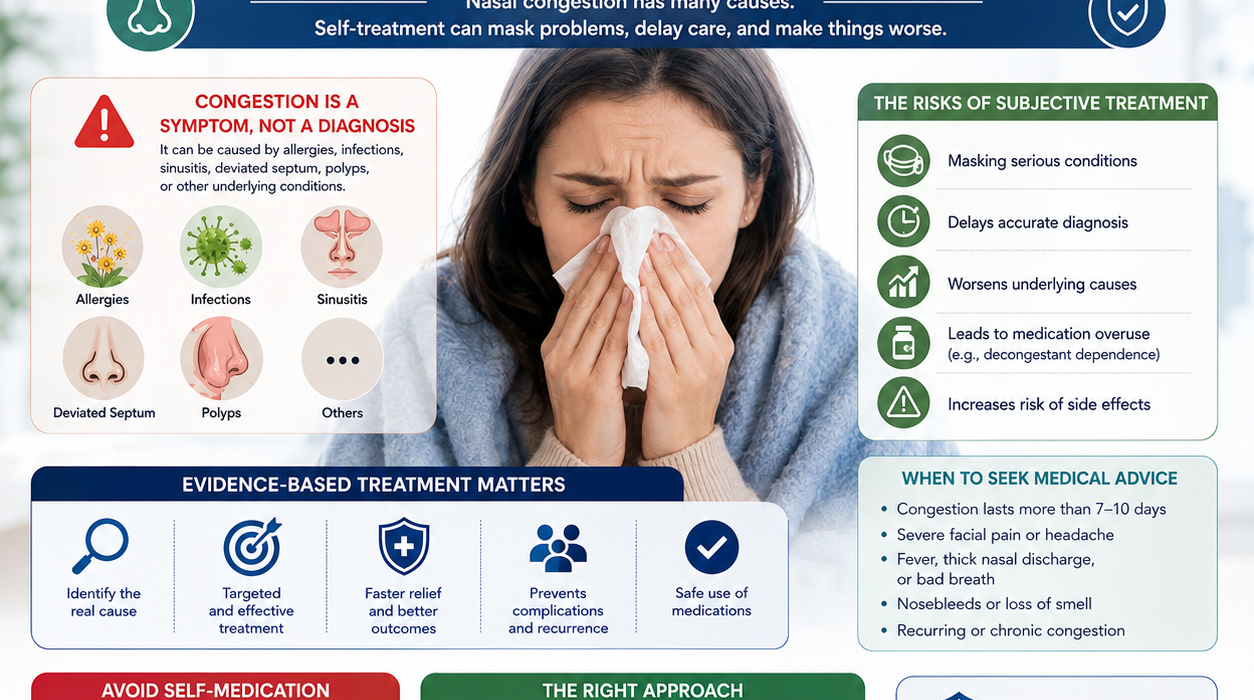
Nasal congestion occurs when nasal tissues become inflamed and swollen, restricting airflow. While the discomfort is subjective, the underlying causes are objective medical conditions.
Common Causes
- Viral Infections: Common cold, flu, COVID-19
- Allergies: Environmental or seasonal allergies
- Sinusitis: Bacterial or viral sinus infection
- Structural Issues: Deviated septum, nasal polyps
- Environmental Factors: Air pollution, dry air, irritants
- Medication Side Effects: Some drugs cause nasal congestion
Objective Assessment Methods
- Nasal Endoscopy: Allows visualization of nasal passages
- CT Scans: Reveals structural issues and sinus problems
- Allergy Testing: Identifies specific allergen triggers
- Cultures: Detect bacterial infections
Treatment Approaches Based on Diagnosis
For Viral Infections: Saline rinses, Humidification, OTC decongestants (short-term), Warm compresses
For Allergies: Antihistamines, Nasal steroid sprays, Allergen avoidance, Immunotherapy if severe
For Sinusitis: Nasal saline irrigation, Antibiotics if bacterial, Nasal steroid sprays, Decongestants
For Structural Issues: Surgical intervention, Continuous positive airway pressure (CPAP)
When to See a Doctor
- Congestion lasting more than 10 days
- Fever over 101°F
- Severe headache or facial pain
- Colored nasal discharge suggesting infection
- Difficulty breathing or sleep
Preventive Measures
- Practice good hygiene
- Avoid allergen triggers
- Use humidifiers
- Stay hydrated
- Manage allergies effectively