The Blood Sample: Understanding Blood Tests and Analysis
Blood tests are fundamental diagnostic tools in modern medicine, providing crucial information about your health status and detecting potential problems early.
What Blood Tests Reveal
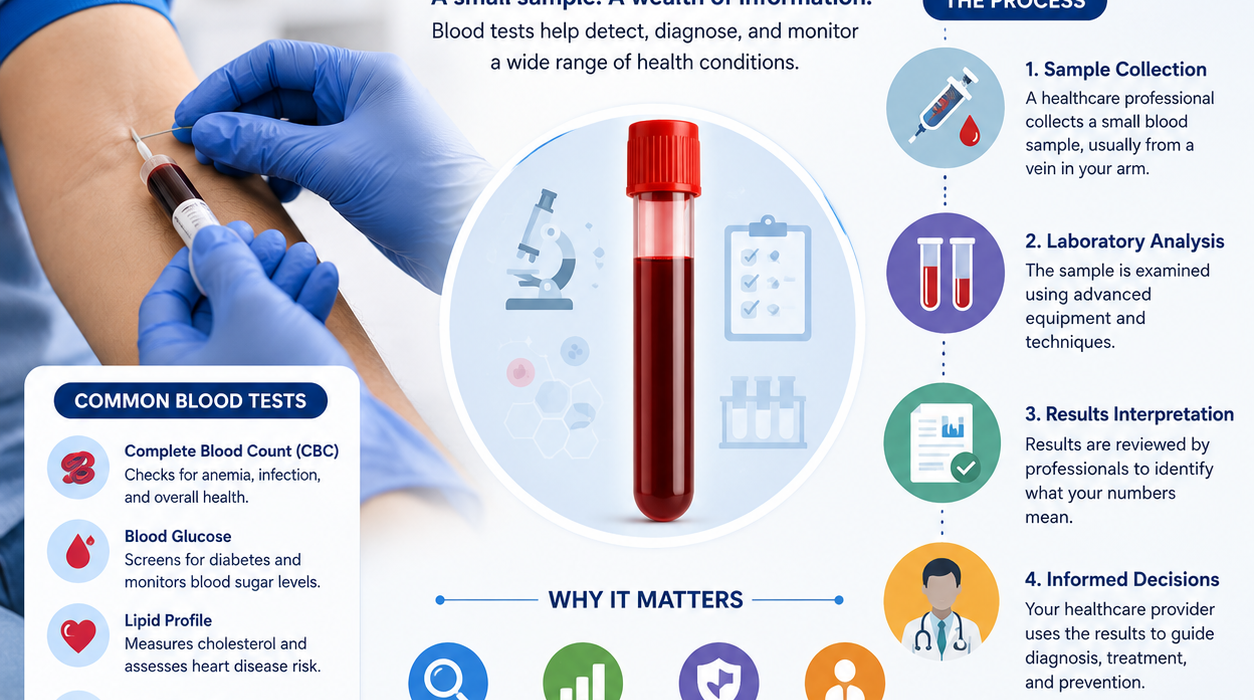
Complete Blood Count (CBC): Measures red blood cells, white blood cells, and platelets to detect infections, anemia, and blood disorders.
Metabolic Panel: Evaluates kidney function, liver function, blood sugar, and electrolytes.
Lipid Panel: Measures cholesterol and triglycerides to assess heart disease risk.
Thyroid Function Tests: TSH and thyroid hormone levels indicate thyroid health.
Blood Glucose Tests: Diagnose or monitor diabetes.
Liver Function Tests: Assess liver health and function.
The Blood Draw Process
Most blood samples are drawn from a vein in the arm using a needle and collection tube. The procedure typically takes minutes and is generally painless.
Sample Analysis
Samples are sent to laboratories where specialized equipment and trained technicians analyze blood components using various testing methods. Results are typically available within 24-48 hours.
Preparation Tips
- Follow fasting instructions if required
- Stay hydrated
- Wear comfortable clothing
- Arrive well-rested
- Inform technicians of medications or blood disorders
Understanding Your Results
Normal ranges vary by lab and test. Your healthcare provider will explain results and what they mean for your health.
Preventive Testing
Regular blood work helps establish baseline health values and detect changes early, enabling prompt treatment of developing health issues.