
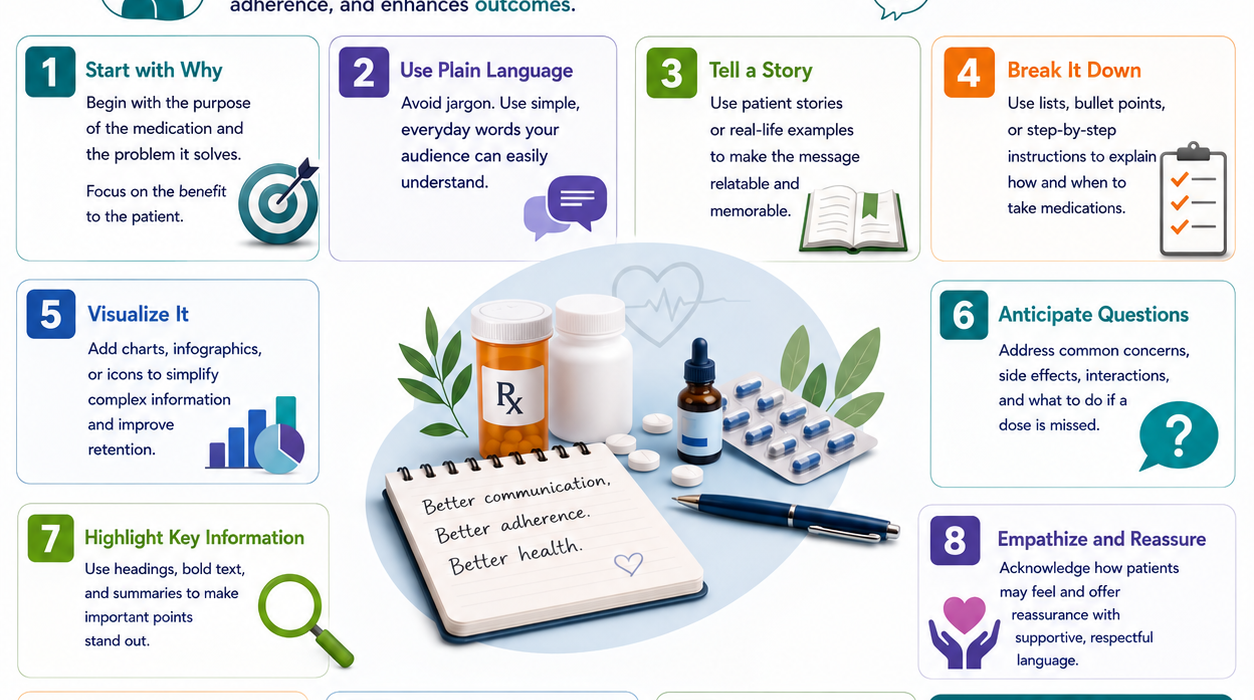
11 Creative Ways to Write About Medication: For Patients and Professionals
Effective medication communication requires creative approaches that help patients understand complex information clearly while maintaining accuracy and professionalism.
1. Use Analogies and Comparisons
Compare medications to familiar concepts. For example, explain antibiotics as soldiers fighting bacterial invaders in your body.
2. Tell Patient Stories
Share anonymized patient experiences and outcomes. Real stories illustrate how medications improve lives and help others relate to the information.
3. Create Visual Infographics
Use diagrams, flowcharts, and graphics to explain medication mechanisms, dosing schedules, and side effects in easily digestible formats.
4. Develop Interactive Checklists
Create practical checklists for medication management, potential side effects to watch for, and questions to ask healthcare providers.
5. Use Question-and-Answer Format
Structure information as FAQs addressing common patient concerns and misconceptions about specific medications.
6. Employ Timeline Visualizations
Show how medications work over time, when to expect results, and what the healing timeline looks like for particular conditions.
7. Create Comparison Charts
Compare different medication options, including effectiveness, side effects, cost, and administration methods side-by-side.
8. Use Metaphors and Storytelling
Frame medication effects through narrative and metaphor to make complex pharmacology more relatable and memorable.
9. Develop Symptom-Based Guides
Organize medication information by symptoms rather than medical terms, helping patients find relevant information quickly.
10. Create Practical Worksheets
Develop downloadable worksheets for medication tracking, symptom journaling, and communication with healthcare providers.
11. Use Testimonial Videos and Audio
Incorporate patient testimonials, expert interviews, and educational videos explaining medication use and benefits.
Tips for Effective Medical Writing
- Avoid medical jargon or explain terms clearly
- Use active voice
- Break information into manageable sections
- Include practical examples
- Always cite credible sources
- Update information regularly
- Make content accessible (large fonts, clear language)