How to Choose the Right Headache Medicine for Your Needs
Not all headaches are the same, and choosing the right medication requires understanding your headache type and available treatment options.
Types of Headaches
Tension Headaches: Most common, characterized by pressure and tightness – Often triggered by stress, Mild to moderate pain, Respond well to rest and OTC analgesics
Migraines: Severe, throbbing pain, often one-sided – May include nausea, sensitivity to light/sound, Require specialized treatment, Can be debilitating without proper medication
Cluster Headaches: Severe, sharp pain around eye area – Occur in clusters over weeks or months, Require prescription medication, Less common but extremely painful
Sinus Headaches: Pain in forehead, cheeks, or bridge of nose – Associated with sinus congestion, Treat underlying sinus condition
Over-the-Counter Options
Ibuprofen (Advil, Motrin): Anti-inflammatory action, Effective for most headache types, May work better than acetaminophen for migraines
Acetaminophen (Tylenol): Gentle on stomach, Good for people who can’t take NSAIDs, Less anti-inflammatory effect
Naproxen (Aleve): Long-lasting pain relief, Anti-inflammatory, Takes longer to work than ibuprofen
Combination Products: Add caffeine to enhance pain relief, Include antacids for stomach protection
Prescription Options
Triptans: Specifically designed for migraines – Effective migraine treatment, Various delivery methods available, Most effective when taken early
Ergot Derivatives: For severe migraines – More effective with caffeine, Multiple delivery options
Preventive Medications: Propranolol (beta-blocker), Topiramate (anticonvulsant), Amitriptyline (antidepressant), Botox injections for chronic migraines
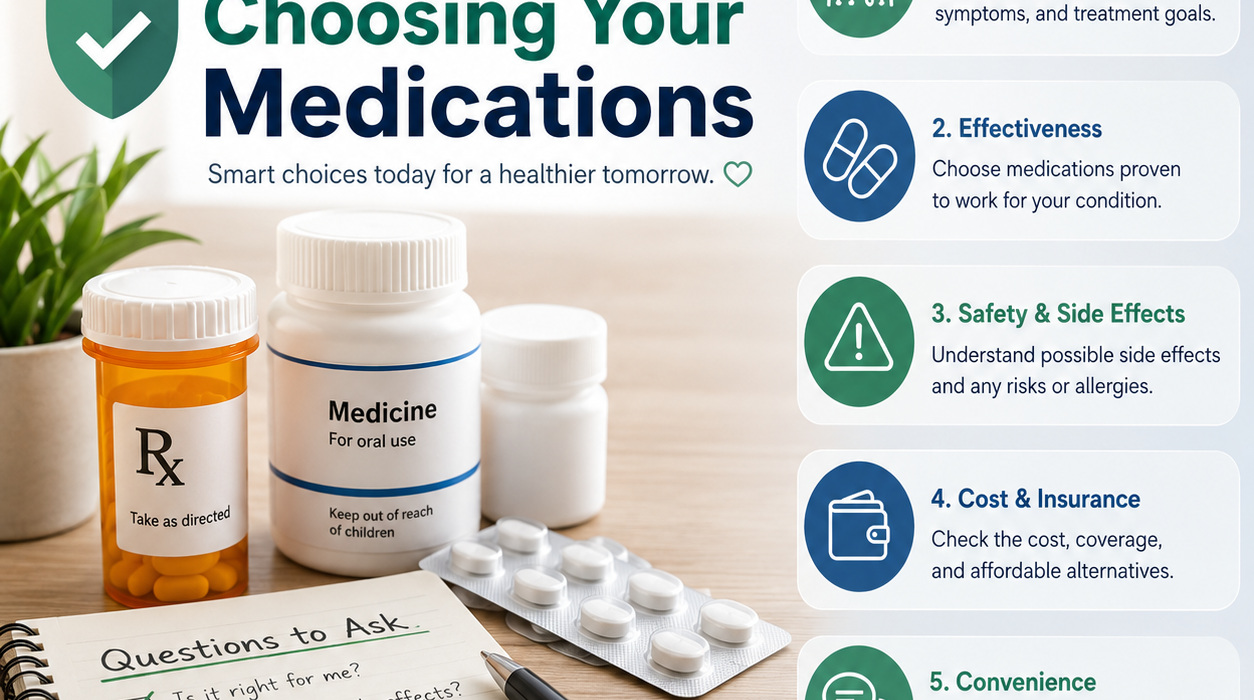
Choosing the Right Medication
- Identify Your Headache Type: Different headaches respond differently to medications
- Consider Frequency: Occasional vs. chronic headaches need different approaches
- Evaluate Triggers: Understanding causes helps prevent and treat effectively
- Try Preventive Strategies First: Stress management, sleep, hydration, exercise
- Start with Lowest Effective Dose: Minimize side effects and dependence risks
- Monitor Effectiveness: Keep a headache diary to track what works
- Avoid Medication Overuse: Taking pain relievers more than 10-15 days monthly can cause rebound headaches
When to Seek Professional Help
- Sudden severe headache different from usual pattern
- Headaches with fever, stiff neck, or vision changes
- Frequent headaches requiring daily medication
- Inability to manage with OTC options
- Headaches disrupting daily activities
Non-Medication Approaches
- Apply heat or cold compress
- Rest in dark, quiet environment
- Progressive muscle relaxation
- Adequate sleep and hydration
- Regular exercise
- Stress management techniques
- Caffeine moderation
- Regular meals
Professional Evaluation Benefits
A healthcare provider can: Accurately diagnose headache type, Rule out serious underlying conditions, Prescribe appropriate preventive medication, Provide specialized treatments like Botox, Develop comprehensive management plans